Living near the water changes what your gutters deal with. Silver Lake homes catch wind-driven rain off Grapevine Lake, sit in higher humidity, and often have larger rooflines with more exposure on every side. Grapevine Gutter Pros is a gutter company serving Silver Lake, Grapevine TX and the lake-area neighborhoods, with systems built for exactly these conditions: bigger capacity, corrosion-resistant materials, and drainage planned for lakeside lots.
If you're comparing every gutter company Silver Lake Estates has to offer, here's what matters: a company that sizes for your roof and your exposure, uses materials that stand up to moisture, and tells you straight whether you need repair, replacement, or just a good cleaning.
What Lake Proximity Does to Gutters
Homes a few streets from the water live in a slightly different climate than homes across town:
Wind-driven rain hits harder. Open exposure near the lake means rain doesn't fall straight down; it drives sideways into fascia, soffits, and siding. Gutters need to catch water arriving at an angle, which punishes undersized troughs and short downspout runs. Six-inch gutters earn their keep here.
Humidity accelerates corrosion. Moisture hangs in the air longer near the lake. Steel components rust faster, sealant ages quicker, and wood fascia stays damp longer after storms. Aluminum gutters and stainless or coated fasteners aren't upgrades here; they're the baseline that lasts.
Bigger rooflines, more water. Many lake-area homes have larger footprints and complex rooflines. More roof means more runoff per linear foot of gutter, which means capacity and downspout count matter more than they do on a small cottage.
Storms arrive with less warning. When a North Texas cell blows across the lake, it hits the shoreline neighborhoods first and hardest. Your gutters don't get a warm-up; they go from dry to deluge in minutes. Systems here need to work at full capacity on demand.
Gutter Company Silver Lake Estates: How to Choose
Not every gutter company thinks about exposure, and it shows in the work. Here's how to tell you're dealing with one that does:
They measure the roof, not just the fascia. Linear footage tells you how much gutter to buy. Roof area tells you how much water the gutter has to handle. A company that only measures the eave line is guessing at capacity.
They talk about downspouts early. On lake-exposed homes, downspout count and placement decide whether the system works in a real storm. If the estimate has one downspout per forty feet on a big roof, keep shopping.
They specify materials, not just "gutters." You should hear gauge, profile, hanger type, and fastener material. Vague quotes produce vague work.
They check fascia before quoting. Any company willing to price a full installation without looking at what the gutters hang on is planning to discover problems on your dime.
They explain guards honestly. Near the lake, wind carries debris that isn't just leaves: seed pods, small twigs, grit. A good company matches the guard to the actual debris instead of selling one type for every house.
Grapevine Gutter Pros works this way on every Silver Lake project. Call (817) 566-8258 and you'll get an assessment that covers the roof, the fascia, the drainage, and your options, in plain language.
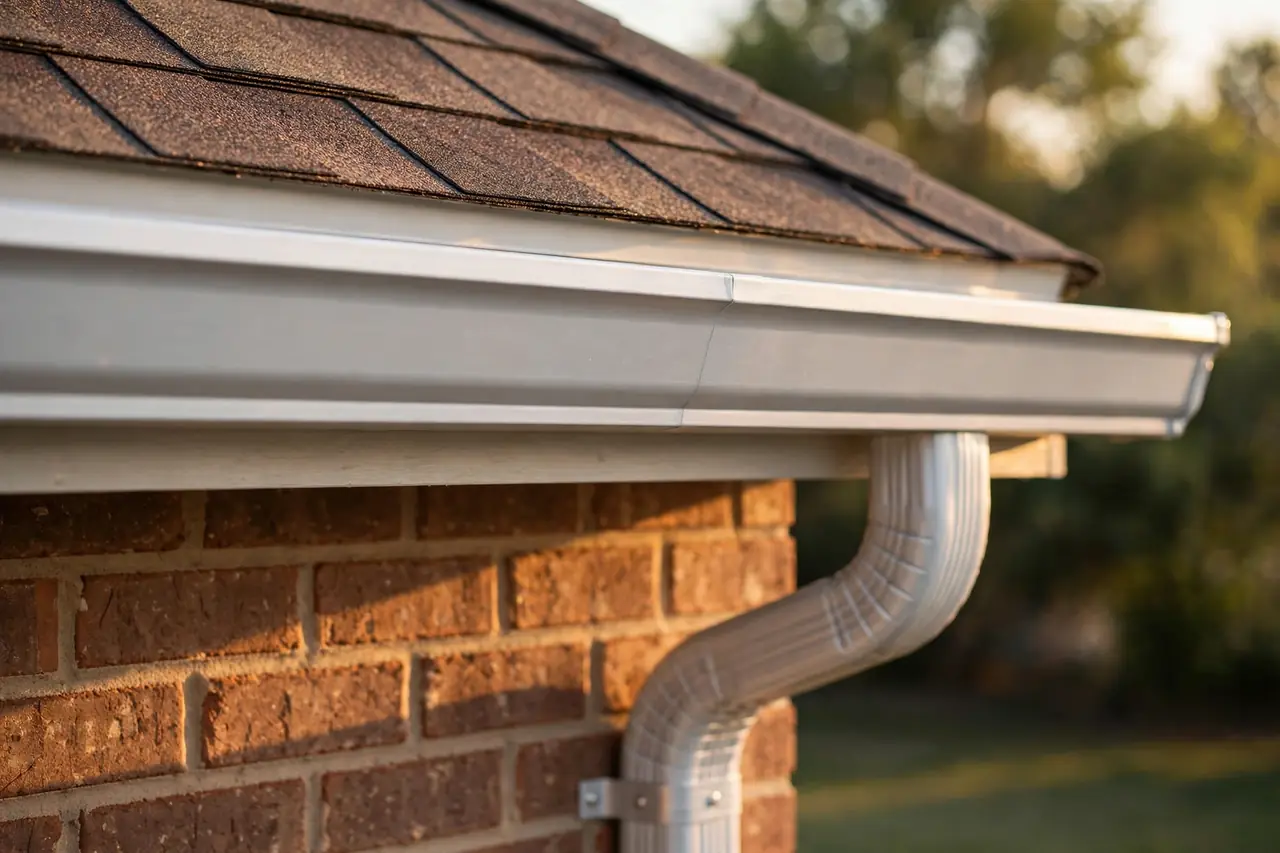
Six-Inch Gutters: The Lake-Area Standard
For Silver Lake homes, we install six-inch gutters far more often than five-inch, and it's not about upselling. The math is simple: deeper trough, more capacity, less overshoot when wind drives rain hard off a big roof.
Five-inch gutters are fine on smaller, sheltered homes. But on a lake-exposed two-story with a large roof plane, five-inch troughs spill over the front edge during the exact storms you bought gutters for. Six-inch with oversized downspouts keeps the water in the system and gets it to the ground where you want it.
Pair that with seamless aluminum fabrication, hangers screwed into solid wood at proper spacing, and sealed corners, and you have a system that handles a lake squall without drama. For homes where architecture calls for it, half-round profiles and copper are available, and they suit some of the area's nicer properties well.
Repair, Replacement, or Cleaning: The Honest Call
Most calls from Silver Lake fall into three buckets, and knowing which one you're in saves money:
Cleaning is enough when the system is structurally sound but loaded with debris. Wind-blown grit, seed pods, and leaf mats choke downspout outlets first, so water backs up and spills. A thorough cleaning with flushed downspouts restores full function. If your gutters are under ten years old and the metal is solid, start here.
Repair is right when there's a specific failure: a sagging run, a leaking corner, a downspout pulling loose, a section dented by a fallen limb. Targeted repairs hold for years when the rest of the system is healthy. We do the repair and check everything else while we're up there.
Replacement is the call when the pattern is system-wide: seams failing in multiple spots, widespread corrosion, hangers pulling across long runs, or chronic undersizing that no repair fixes. At that point, repairs are rent on a failing system. A new installation sized for your roof and exposure is the better value.
We'll tell you which bucket you're in during the assessment. No scare tactics, no invented urgency.
Drainage on Lakeside Lots
Gutters are only half the water story. Where the downspouts put the water decides whether your foundation and yard stay dry.
Lakeside lots often slope, and Texas clay soil doesn't absorb cloudburst runoff; it sheets across the surface. Downspouts that end at the foundation create the exact problems gutters exist to prevent: saturated soil against the slab, erosion channels, and soggy zones that never quite dry.
We plan discharge as part of every job: extensions that carry water well out from the house, routing that follows the lot's natural drainage, and on sloped lots, placement that doesn't just hand your runoff to the downhill neighbor. It's unglamorous work that prevents expensive problems.
What to Watch For After Storms
Lake-area homes take the first hit when weather crosses Grapevine Lake. After a big cell, do a quick ground-level check:
- Gutters overflowing at specific spots (marks a clog or a pitch problem)
- New dents or sections pulled away from the fascia (wind or limb damage)
- Granules or grit piled at downspout outlets (roof wear washing downstream)
- Erosion lines or washed mulch under the eaves (water escaping the system)
- Water standing near the foundation where it didn't before (drainage failure)
One storm rarely destroys a sound system, but storms find every weakness in a marginal one. If you spot changes after weather, call (817) 566-8258 for a look before the next cell rolls across the lake.
More Areas We Serve
Frequently Asked Questions
Direct answers to common questions.
Why do gutters near Grapevine Lake seem to wear out faster?+
It's the exposure. Wind-driven rain hits homes harder and more often, humidity keeps metal and wood damp longer, and storms arrive with full force off the water. That combination accelerates corrosion, loosens hangers, and punishes undersized systems. Six-inch gutters, aluminum construction, and coated fasteners offset most of it, which is why material and sizing choices matter more near the lake.
Should I get six-inch gutters or are five-inch fine?+
It depends on your roof and exposure. Five-inch gutters handle smaller, sheltered homes fine. But on larger rooflines with open lake exposure, five-inch troughs overshoot during heavy wind-driven rain, sending water past the gutter entirely. If your current gutters spill over the front edge in storms, that's a capacity problem, and six-inch with properly sized downspouts is the fix.
How often should lake-area gutters be cleaned?+
Twice a year at minimum: late fall after leaf drop and spring after storm season and oak shedding. Wind off the lake carries debris year-round, so homes with heavy nearby trees do better with three cleanings or fitted gutter guards. The real test is the downspout outlets: if water backs up there, the system is choked regardless of the calendar.
Do gutter guards work with the debris near the lake?+
Yes, when matched to the debris. Lake wind carries leaves, seed pods, twigs, and fine grit. Mesh-style guards handle that mix well on most rooflines; the wrong guard type clogs at the surface and just moves the problem. We'll look at your trees and roofline and tell you honestly whether guards pay off or scheduled cleanings are the smarter spend.
Can you fix drainage problems, not just gutters?+
That's part of the job. Gutters collect the water; downspout extensions and discharge routing decide where it goes. We extend downspouts away from foundations, plan routing around the lot's slope, and make sure discharge doesn't create new problems downhill. If your issue is water pooling rather than overflowing gutters, say so when you call and we'll assess the drainage specifically.
Do you work on homes right on the water?+
Yes. Waterfront and near-waterfront homes around Grapevine Lake are a big part of our lake-area work. They get the same assessment process with extra attention to wind exposure, corrosion-resistant fasteners, and drainage, since these homes take the hardest weather. Call (817) 566-8258 to schedule.