Gutter guard installation in Grapevine, TX is the fix for homeowners who are tired of cleaning oak leaves out of their gutters three times a year. A good guard system keeps leaves, twigs, and debris out of the trough while letting rainwater flow through to the downspouts. The result is gutters that mostly take care of themselves, with only occasional light maintenance instead of full cleanouts.
But not all guards work the same, and the wrong type for your trees can be worse than no guards at all. This page covers every major guard type, how each one handles North Texas debris, what installation actually involves, and the honest truth about maintenance. By the end, you'll know exactly which system fits your home.
Do Gutter Guards Actually Work?
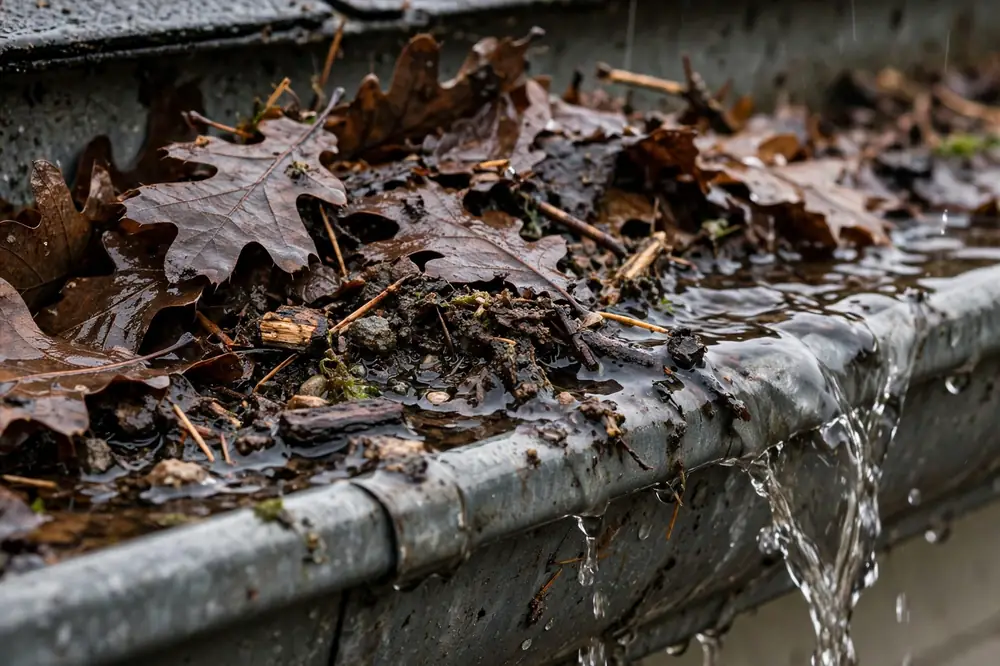
Yes, when they're matched to the debris your trees produce. Gutter guards are simple devices with one job: block solid debris while admitting water. They do this job well for large leaves, twigs, and seed pods. They struggle with fine debris like pine needles, oak catkins, and shingle grit, which is why choosing the right type matters so much in Grapevine.
Here's the honest framing. Guards reduce gutter maintenance dramatically. They do not eliminate it. Anyone who tells you that you'll never think about your gutters again is selling, not advising. What guards really buy you is freedom from the heavy, dangerous, full-trough cleanouts, replaced by quick surface brushing once or twice a year.
For Grapevine homes under live oaks, post oaks, and cedar elms, properly chosen guards are one of the best home investments you can make. The leaf load here is genuinely extreme compared to most of the country.
Call (817) 566-8258
Gutter Guard Types: What Your Options Are
There are five main categories. Each has real strengths and real weaknesses.
Micro-Mesh Guards
What they are: A stainless steel or aluminum mesh with tiny openings, mounted in a frame that sits on top of the gutter. The mesh is fine enough to block almost everything except water.
Best for: Homes with pine needles, oak catkins, and fine seed debris. If your gutters fill with tiny stuff that slips through coarser guards, micro-mesh is the answer.
Watch out for: The fine mesh can develop a film of pollen, dust, and shingle grit over time, especially on the north side of the house where it stays damp. That film slows water and can cause overshoot in heavy rain. It needs an occasional brushing or rinse. Also the most expensive category, and quality varies enormously between manufacturers.
Standard Screen / Mesh Guards
What they are: Metal or plastic screens with larger openings than micro-mesh, laid over or snapped into the gutter.
Best for: Large leaves on a budget. They keep out the big stuff reliably.
Watch out for: Oak catkins, pine needles, and small seeds pass right through the openings and then get trapped underneath, where they're harder to clean than an open gutter. In Grapevine's oak-heavy neighborhoods, standard screens are often a disappointment within two years.
Foam Inserts
What they are: Porous foam blocks shaped to fill the gutter trough. Water soaks through the foam and flows to the downspout; debris stays on top.
Best for: Short-term, low-cost protection on simple rooflines.
Watch out for: This is the type with the most honest drawbacks. Foam breaks down in Texas UV and heat, typically within a few years. It traps fine sediment inside its pores, which can clog it from within. It can also harbor seeds that sprout into actual plants growing in your gutter. We mention foam because people ask about it, not because we recommend it for North Texas.
Brush Guards
What they are: Cylindrical bristle brushes that sit inside the gutter. Debris catches on the bristles while water flows around them.
Best for: Light debris situations and as a cheap experiment.
Watch out for: Heavy oak leaf loads mat down onto the brushes and form a soggy layer that's miserable to clean. Brushes work best where debris is light and mostly large leaves.
Reverse Curve / Surface Tension Guards
What they are: A solid cover with a curved front edge. Water clings to the curve and flows into the gutter; debris falls off the edge.
Best for: Heavy leaf loads on roofs with good pitch. The classic design for exactly the big-leaf problem.
Watch out for: They need proper installation angle to work. On low-slope roofs, water can overshoot the curve in heavy downpours, which Grapevine gets. They also sit visibly on the roofline, which some homeowners don't love aesthetically. Pine needles can wedge into the slot opening.
Those designs also come in different materials, and the material matters as much as the shape. Aluminum gutter guards resist rust and hold their shape through Texas summers, which is why most professional systems use them. Copper gutter guards are the premium pick, chosen to match copper gutters on high-end and historic homes, and they weather to a patina over the years. Plastic gutter guards fill most bargain DIY kits. They cost the least and install the fastest, but sun and heat make them brittle sooner than metal. Whatever the frame, the working part of rain gutter guards is the surface itself. Standard mesh gutter guards and screen gutter guards stop leaves and twigs. Micro-mesh stops the fine stuff too, which is why micro mesh gutter guards, also sold as micromesh gutter guards, dominate under Grapevine's oaks. Leaf gutter guards of any style fail the same way: when the openings are too coarse for the debris falling on them.
Which Guard Type Fits Grapevine's Trees?
This is the section that actually matters, because national advice doesn't account for what grows here.
Under live oaks: You need micro-mesh. Live oaks shed leaves in spring, drop catkins that behave like tiny needles, and shed twigs year-round. Only micro-mesh blocks all three. Standard screens will let the catkins through, and you'll be cleaning under the screens within two seasons.
Under pines: Micro-mesh again. Pine needles defeat every other type. They spear through screens, mat on brushes, and slide under reverse-curve edges.
Under cedar elms and red oaks (fall shedders): You have more options. These trees drop larger leaves in fall, which reverse-curve and quality screen guards handle well. Micro-mesh still works, but you can save money with a coarser system if pine needles aren't in the mix.
Mixed canopy (most Grapevine neighborhoods): Default to micro-mesh. Most established Grapevine streets have a mix of oaks, elms, and the occasional pine. The fine-debris protection of micro-mesh covers every scenario, while coarser guards only cover some.
Near Grapevine Lake: Add wind to the calculation. Lakeside homes get wind-driven debris packed harder into gutters, and storms arrive with more force. Guards need solid fastening here, not friction-fit inserts that can lift.
Call (817) 566-8258
What Gutter Guard Installation Actually Involves
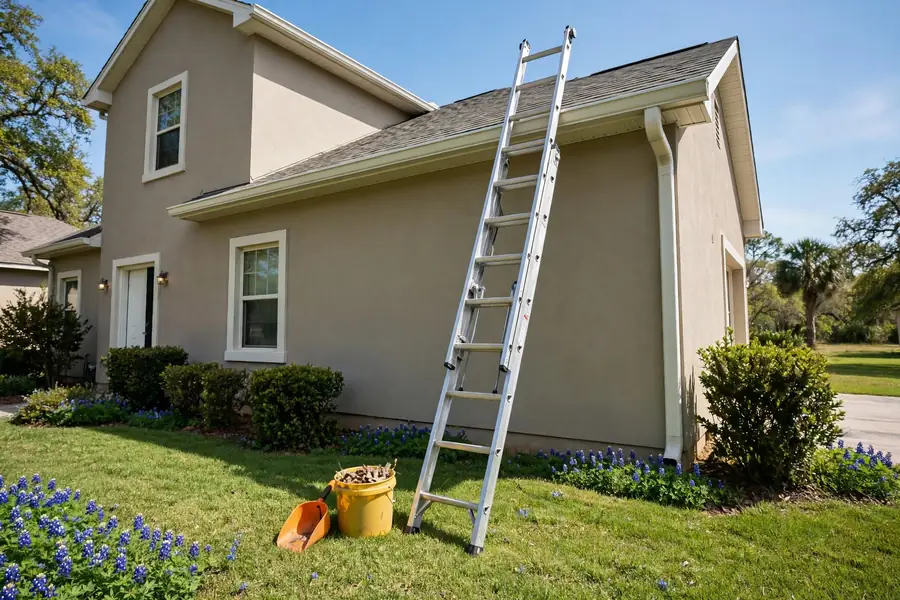
Installation is straightforward when it's done right. Here's the process:
- Step
1Gutter assessment and cleaning
Guards go onto clean, sound gutters. The troughs get fully cleaned, hangers get checked and tightened, pitch gets verified, and any needed repairs happen first. Installing guards over damaged gutters hides problems instead of solving them.
- Step
2Measuring and fitting
Each run is measured. Quality guard systems are cut to fit the exact gutter profile, including inside and outside corners, which are the trickiest spots. Corners are where cheap installations fail first.
- Step
3Mounting
Depending on the system, guards screw to the gutter lip, slide under the first course of shingles, or mount to the fascia. The mounting method matters: guards that lift shingles can void shingle warranties if done carelessly, and guards that only friction-fit can shift in high wind.
- Step
4Downspout protection
The tops of downspouts get screened or fitted with filters. This is a step that gets skipped too often. A guarded gutter feeding an unguarded downspout just moves the clog downstream.
- Step
5Water test
The system gets tested with water to confirm flow into the gutters, no overshoot at the guard edge, and clear drainage through the downspouts.
- Ready
When
You Are
A typical Grapevine home takes a few hours. Larger or multi-story homes take longer, mainly because of ladder work and access.
The Honest Truth About Guard Maintenance
Let's kill the "never clean your gutters again" myth for good.
What guards eliminate: Full-trough cleanouts. The disgusting job of scooping decomposed muck out of the gutter channel. With good guards, that job essentially disappears.
What guards don't eliminate: Surface debris. Leaves and twigs land on top of the guards and mostly blow off, but some stay. Once or twice a year, usually after the spring oak shed and the fall drop, the guard surfaces need brushing off. This is a quick job with a leaf blower or a soft brush from a ladder, nothing like a full cleanout.
What to watch for: Fine sediment can accumulate on micro-mesh over time. If you notice water starting to sheet over the guards instead of flowing through, the mesh needs a rinse. Valley areas where two roof planes meet concentrate debris and deserve extra attention during your twice-yearly check.
Downspouts still matter. Guards don't stop shingle grit, which washes off the roof and settles in downspouts and elbows. Every couple of years, downspouts deserve a flush even on a guarded system.
The maintenance reality is this: guards turn gutter care from a dreaded semi-annual project into a minor twice-yearly glance. That's the real value proposition, and it's a good one.
Gutter Guards vs. Regular Cleaning: Which Makes Sense?
Some homeowners ask whether guards are worth it versus just paying for cleanings. Think about it this way:
Guards make sense when you're cleaning three or more times a year, your trees are mature and aren't going anywhere, ladder work is getting harder or riskier for you, or you've had gutter damage from debris weight and overflow.
Regular cleaning makes sense when you have few overhanging trees, your gutters are easy to access, or you're planning a full gutter replacement soon and want to choose guards as part of the new system.
The combination play: Many Grapevine homeowners do both, guards plus a light professional check once a year. The guards handle the debris, and the annual visit catches hanger issues, sealant aging, and downspout grit before they become repairs. It's the lowest-effort way to keep the whole system healthy.
For a deeper comparison of guard types and what they cost to own over time, see our guide: Best Gutter Guards for North Texas.
Call (817) 566-8258
Installation Mistakes That Ruin Good Guards
Even the best guard system fails if it's installed badly. Watch for these:
Guards installed on damaged gutters. If the gutters sag, leak, or have soft fascia behind them, guards just hide the problem while it gets worse. Repair first, guard second.
Wrong type for the debris. Standard screens under pine trees. Foam in full Texas sun. This is the most common and most expensive mistake, because the homeowner pays twice: once for the wrong guards, once to replace them.
Disturbing the shingles. Some guard styles slide under the bottom shingle course. Done carefully, this is fine. Done carelessly, it breaks the shingle seal or voids the warranty. The installer should know your shingle type and work accordingly.
Skipping the downspouts. Unguarded downspout openings clog, and then the guarded gutter overflows at the nearest seam. Every downspout needs protection as part of the job.
Bad corner work. Inside and outside corners are where water moves fastest and debris collects most. Sloppy corner fitting is where cheap installations visibly fail within the first big storm.
Combining Guards With New Gutters
The smartest time to add gutter guards is when you're installing new gutters. The troughs are clean, the hangers are new, the pitch is perfect, and the guard system gets fitted to a known-good installation. Doing both at once also means one round of ladder work and one disruption instead of two.
If your current gutters are nearing replacement anyway, get the replacement quote and the guard quote together. Many homeowners find that guards on brand-new seamless gutters, installed as a single project, give them a system they barely think about for years. The gutters themselves are covered here: Seamless Gutters in Grapevine, TX.
Gutter Guard Installation in Grapevine, TX: Service Areas
For gutter guard installation in Grapevine, TX, Grapevine Gutter Pros serves the 76051 and 76099 ZIP codes, including:
- Historic Downtown Grapevine and Main Street
- Dove Crossing
- Silver Lake Estates
- Timberline
- The neighborhoods around Grapevine Lake
- Nearby: Colleyville, Southlake, Coppell, Euless, Flower Mound
The Honest Truth: No Gutter Guard Is Maintenance-Free
"There's no such thing as a maintenance-free gutter guard system." That line comes straight from homeowner forums, and it is the most trustworthy sentence ever written about this product. Every guard type still needs attention. Fine dust, shingle grit, and pollen film collect on top of even the best micro-mesh and need brushing off once or twice a year. What changes between guard types is the *kind* of maintenance, not whether it exists.
Micro-mesh guards ask the least of you: a soft brush across the surface now and then. Standard screens catch leaves but let smaller debris mat across the top, so the screens themselves need clearing. Foam and brush inserts ask the most: debris works into the material where it rots in place and cannot be flushed out, and saturated foam eventually needs replacing.
You will hear one brand name constantly while researching: LeafFilter. It is the best-known professionally installed micro-mesh system in the country, sold through in-home sales appointments, and homeowner forums are full of discussion about it — some from satisfied customers, and a lot about high-pressure sales visits. Treat any guard pitch, from any brand, the way experienced homeowners tell you to: if the salesperson says you will never touch your gutters again, that is the exact line the forums warn about. Buy the guard, not the pitch.
Two things actually decide whether a guard is worth it on your home. First, the mesh: finer stops more, and under North Texas oaks you want true micro-mesh, not a coarse screen. Second, the mounting method: fascia-mounted guards leave your shingles alone, while guards fastened through the shingles can threaten your roof warranty. Get the maintenance expectations in writing before you sign anything, and compare our North Texas guard comparison to see how each type handles local debris.
DIY Gutter Guards: What the Kits Get Right and Wrong
The kits have improved. The better kits use real aluminum mesh, include proper fasteners, and work fine on a simple single-story roofline. Where homeowners get in trouble is corners and fit: a small gap at an inside corner lets debris in, and it is hard to spot from the ground. Most kits also assume your gutters are level, clean, and solidly hung to start with.
If you like doing your own work, the best diy gutter guards are the screw-down micro-mesh panels, cut carefully and sealed at the seams. If your home is two stories, your roofline is cut up with valleys, or your gutters already sag, having a pro install gutter guards is less about the product and more about the ladder work and the fitting. Either way, guards are only as good as the gutter underneath them.
Gutter Guards in Winter
North Texas winters are mild, but the freezes we do get raise real questions. Gutter guards in winter can sheet over with ice in a hard freeze, and gutter guards freezing at the eave can slow meltwater for a day or two. It looks alarming and usually resolves by the afternoon sun. Guards do not create the conditions for ice dams here; attic heat loss does, and our dams are rare and short-lived.
December brings a different question: how to hang christmas lights with gutter guards already installed? Use clips made for guards, or attach lights to the fascia or shingle edge instead. Do not screw through the guard or pry panels up to make room, because a lifted edge is an open door for debris all winter.
One related product comes up in freeze questions: gutter heat tape installation along a problem eave. It can help a north-facing valley that keeps refreezing, but it treats the symptom. If ice is a yearly problem, attic insulation and ventilation are the real fix.
Do Gutter Guards Increase Home Value?
Not on an appraiser's worksheet, no. They do not add appraised value the way a new roof does. What they do is show a buyer a home that has been maintained, with clean gutters, sound fascia, and no overflow stains on the siding. That impression matters at resale, even if no line item names it.
Are gutter guards necessary? No. They are a trade: money now for fewer cleanings and less overflow risk later. On a home with no trees dropping anything, they solve a problem you do not have. Under Grapevine's oaks, most homeowners decide the trade is worth it.
More Services
Frequently Asked Questions
Direct answers to common questions.
Do gutter guards really work?+
Yes, when matched to your trees. Guards reliably block leaves, twigs, and large debris while letting water through. They struggle only when the wrong type meets fine debris like pine needles or oak catkins. In Grapevine's oak-heavy neighborhoods, micro-mesh guards are the reliable choice because they block both large and fine debris.
How do you clean gutters that have gutter guards?+
You brush debris off the top of the guards once or twice a year, usually with a leaf blower or soft brush. You don't scoop the trough because debris never gets in. If water starts sheeting over micro-mesh instead of flowing through, rinse the mesh surface. Downspouts still deserve an occasional flush for shingle grit.
What are the pros and cons of mesh vs. foam gutter guards?+
Mesh guards, especially micro-mesh, last for years, block fine debris, and are easy to brush clean, but cost more upfront. Foam inserts are cheap and easy to install but break down in Texas heat and UV within a few years, trap sediment inside their pores, and can grow seedlings. For North Texas, mesh is the better long-term choice.
What is the best gutter guard for oak trees?+
Micro-mesh guards. Live oaks shed leaves, catkins, and twigs, and only fine mesh blocks all three. Standard screens let catkins through, where they wedge underneath and create clogs that are harder to clear than an open gutter. If your home sits under mature oaks, don't compromise on mesh size.
Can I install gutter guards myself?+
Snap-in and drop-in styles are genuinely DIY-friendly on a single-story home with safe ladder access. Screw-mounted micro-mesh systems are harder to fit correctly, especially at corners, and mistakes there cause overshoot and leaks. If your roofline is complex or two stories, professional installation is worth it for the fitting alone.
Will gutter guards stop icicles or ice dams?+
Ice dams are rare in North Texas, so this is mostly a non-issue here. Guards don't cause ice problems in our climate. What they do prevent is the far more common local problem: debris dams that trap water and breed mosquitoes during our long warm season.
Do gutter guards affect my roof warranty?+
It depends on the mounting method. Guards that slide under shingles can disturb the shingle seal if installed carelessly, which is why the installer's technique matters. Guards that mount to the gutter lip or fascia don't touch the shingles at all. Ask how your chosen system mounts before it's installed.
Do gutter guards cause ice dams?+
No. Ice dams form when heat escaping from the attic melts snow on the roof and the meltwater refreezes at the cold eave. Guards sit inside the gutter, not on the roof, and they neither create attic heat loss nor block drainage once things thaw. In North Texas, true ice dams are rare and brief regardless.
Why do some people say gutter guards are bad?+
Type why gutter guards are bad into a search bar and the pattern is consistent: somebody bought the wrong type or believed the maintenance-free promise. Cheap foam and brush inserts clog, sag, and disappoint. The honest version: guards are a maintenance reducer, not a miracle. Matched to your trees and installed well, they work. Sold as magic, they disappoint.
Who installs gutter guards near me in Grapevine?+
Local gutter companies do, including the pros in our network. When you search for a local installer, look for one who asks about your trees before recommending a product, explains how the guard mounts, and talks honestly about upkeep. Call (817) 566-8258 and we will connect you with a Grapevine installer.