Fascia and soffit repair in Grapevine, TX usually starts with a gutter problem. The fascia is the vertical board your gutters hang from. The soffit is the flat surface under the roof overhang. When gutters leak, overflow, or pull away, water attacks both, and rotted fascia can't hold gutters while damaged soffits invite pests and wreck attic ventilation. Fixing the boards without fixing the water source just starts the countdown again.
This page explains what fascia and soffit do, how to spot damage early, how failing gutters destroy them, what repair involves, and why soffit vents matter so much in Texas heat. If your gutters are part of the problem, start there too: Gutter Repair in Grapevine, TX.
What Fascia and Soffit Actually Do
These two components are easy to ignore because they just sit there quietly. But they do critical work.
Fascia is the vertical trim board running along the edge of the roof, covering the ends of the rafters. Its jobs: provide the mounting surface for gutters, protect the rafter ends from weather, and give the roofline its finished edge. Everything gutter-related depends on fascia being solid. Gutters screwed into rotted fascia will pull loose no matter how good the gutters are.
Soffit is the horizontal surface spanning from the fascia back to the house wall, closing off the underside of the roof overhang. Its jobs: keep weather, birds, squirrels, and insects out of the rafter bays and attic, and, critically, provide intake ventilation for the attic through vented panels.
The system works together. Roof, gutters, fascia, and soffit form one weatherproof assembly at the roof edge. Water that gets past any one of them attacks the others. That's why fascia and soffit damage so often traces back to gutter failure, and why repairing them in isolation, without addressing the water, rarely lasts.
Call (817) 566-8258
How Bad Gutters Destroy Fascia and Soffit
This is the damage chain we see most often in Grapevine, and understanding it explains why gutter maintenance is really roofline maintenance.
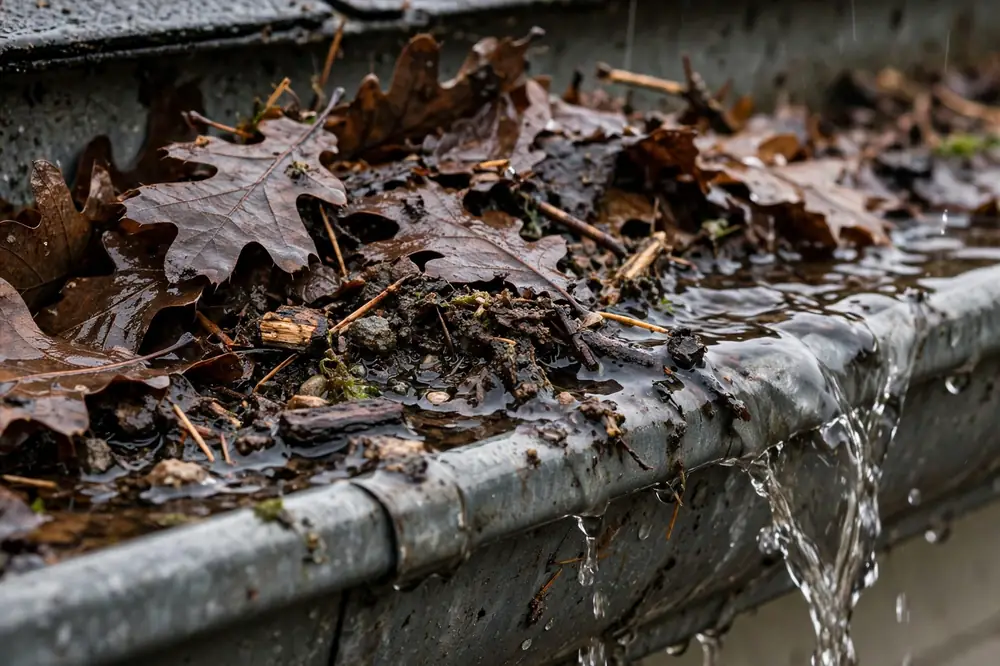
Step 1: The gutter leaks or overflows. A failed seam drips behind the gutter. A clogged trough spills over the back edge. A gutter pitched wrong holds water against the fascia constantly.
Step 2: The fascia stays wet. Wood that never dries starts to soften. Paint peels first, which is the visible warning. Underneath, fungal rot begins. In our humid climate with long warm seasons, rot progresses faster than most homeowners expect.
Step 3: Fasteners lose their grip. Gutter hangers screwed into softening wood work loose. The gutter sags or pulls away, which dumps more water behind it, which rots more wood. The cycle accelerates.
Step 4: Water reaches the soffit. Once the fascia is compromised, water gets into the rafter bays and onto the soffit panels. Wood soffits rot. Ventilated soffit panels clog with debris and stop breathing.
Step 5: Pests and ventilation failure. Damaged soffits are an open door. Squirrels chew through soft spots into the attic. Birds nest in the gaps. And with vents blocked or broken, attic airflow collapses, which overheats the attic and the roof above it.
The whole chain starts with water management. Fix the gutters, and you stop the chain. Ignore the gutters, and fascia repair becomes a recurring expense instead of a one-time fix.
Signs Your Fascia Needs Repair
Walk the perimeter of your house and look up. Here's what damage looks like:
Peeling or bubbling paint on the fascia boards. Paint fails where moisture gets behind it. If the fascia paint is peeling in spots while the rest of the trim looks fine, water is hitting those spots regularly, usually from a gutter leak above.
Soft spots. Press the fascia with a screwdriver or even a firm thumb in suspect areas. Solid wood resists. Rotted wood gives, feels spongy, or crumbles. Check especially behind gutter seams and at corners where water concentrates.
Visible rot or crumbling wood. Advanced rot is unmistakable: dark, soft, fibrous wood that falls apart. By the time it's visible from the ground, the damage is significant.
Gutters pulling away. If the gutter is separating from the house, the fascia behind it may be too soft to hold fasteners. This is the point where gutter repair and fascia repair become the same job.
Staining and streaking. Dark water stains running down the fascia, or green algae growth, mark where water regularly flows over or behind the gutter. The stain is the map of the leak.
Insect activity. Carpenter ants and termites love moist, soft wood. If you see insect traffic around the roofline, the fascia may be compromised, and you have two problems, not one.
Signs Your Soffit Needs Attention
Soffit damage is sneakier because it's underneath, but the signs are there:
Sagging or detached panels. Soffit panels that bow down or have pulled loose from their channels need refastening or replacement. Wind gets under loose panels and makes it worse.
Holes or chewed edges. Squirrels and birds exploit any weakness. A small gap becomes a chewed hole becomes attic access. If you hear scratching in the eaves, check the soffits first.
Blocked or painted-over vents. Soffit vents clogged with paint, debris, or insulation can't move air. From the ground, look for vent panels that look sealed or packed. Blocked intake vents are one of the most common and most overlooked attic problems in Texas.
Water staining. Stains on the soffit surface mean water is getting into the overhang, usually from fascia failure above or from roof leaks running down into the eave.
Peeling paint on wood soffits. Like fascia, peeling paint on a wood soffit signals chronic moisture. The source needs finding, not just repainting.
Fascia and Soffit Materials
What your fascia and soffit are made of determines how they fail and how they're repaired.
Wood fascia. Traditional and common on older Grapevine homes. Looks great when maintained, rots when neglected. Repair means cutting out rotted sections and splicing in new boards, primed on all sides before installation. Bare wood ends are where rot starts, so proper priming matters enormously.
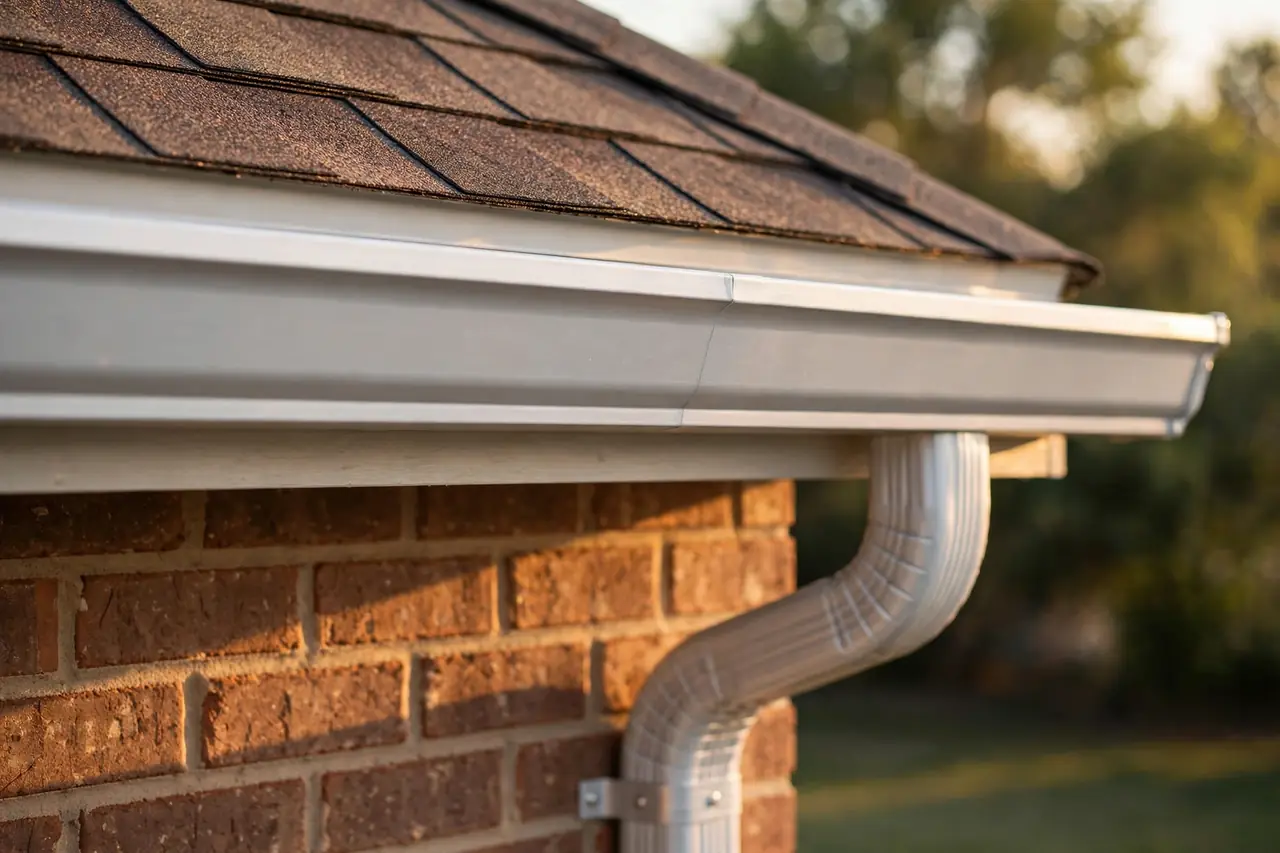
Aluminum-wrapped fascia. Many homes have wood fascia covered with bent aluminum cladding. The cladding protects the wood and looks clean, but it hides problems. Rot can progress underneath invisible cladding for years. When gutters get replaced is the right time to check what's under the wrap.
Vinyl soffit. Common, affordable, and rot-proof. Quality varies: thin vinyl sags in Texas heat and gets brittle with UV age. Good vinyl soffit with proper vent panels performs well for years.
Aluminum soffit. More rigid than vinyl, holds up better in heat, takes paint. Vented aluminum panels are excellent for attic intake. Costs more than vinyl but lasts longer.
Wood soffit. Found on older and higher-end homes. Beautiful, and also the most maintenance-hungry: it needs paint, it rots when wet, and it's pest-prone. Repair is straightforward carpentry but must be paired with solving the moisture source.
Fiber cement. The modern premium option for both fascia and soffit. Rot-proof, insect-proof, fire-resistant, and holds paint well. Heavier and pricier, but essentially permanent once installed correctly.
When repairing, the material choice should match the home's existing trim and the homeowner's tolerance for maintenance. There's no universal best, only best for the situation.
Call (817) 566-8258
What Fascia and Soffit Repair Involves
A proper repair is carpentry plus water management, in that order of thinking but often done together.
- Step
1Inspection and damage mapping
Every fascia board gets checked for soft spots, not just the obviously bad sections. Rot spreads along boards, and the visible damage is usually the tip. Soffit panels get checked for attachment, vent function, and pest entry.
- Step
2Gutter removal where needed
Gutters in the work area come down carefully. This is the moment of truth for what's underneath, and it's why gutter and fascia work so often happen together.
- Step
3Rotted material removal
Damaged wood gets cut back to solid, healthy material. Patching over rot doesn't work: rot is fungal, and it continues in the wood you leave behind. The cut has to reach clean wood.
- Step
4New material installation
Replacement boards go in primed on all six sides, which is the detail that separates lasting work from repeat work. Soffit panels get replaced or refastened, with vent panels where attic intake is needed.
- Step
5Sealing and finishing
Joints get caulked, the new work gets primed and painted to match, and cladding goes back where it was. The finish isn't cosmetic vanity: paint is the moisture barrier.
- Step
6Water source correction
This is the step that determines whether the repair lasts. The gutter leak gets fixed, the pitch gets corrected, the clog gets cleared, or the gutters get replaced. Repairing fascia without fixing the water is just scheduling the next repair.
- Step
7Gutter reinstallation
Gutters go back up on solid wood with proper hangers, correct pitch, and sealed joints. The system is whole again.
- Ready
When
You Are
In practice, soffit and gutter repair usually share a visit with fascia work, because all three live in the same few inches of the house. A combined gutter and fascia repair visit handles the leak source, the damaged wood, and the rehang in one mobilization, which is cheaper and leaves the whole edge sealed in a single day.
Soffit Vents and Texas Attic Heat: Why It Matters
This section deserves emphasis because it's the most underappreciated part of the roofline in our climate.
Your attic needs to breathe. Hot air rises and exits through ridge or roof vents, and replacement air enters through the soffit vents. That continuous airflow does three things: it carries heat out of the attic, it carries moisture out, and it keeps the roof deck closer to outside temperature.
In a Texas summer, a poorly ventilated attic can run far hotter than the outside air. That heat bakes shingles from underneath, shortening roof life. It radiates into living spaces, raising cooling bills. And trapped moisture from the house condenses on the cooler roof deck in winter, feeding mold.
Soffit vents are the intake half of this system. Without intake, exhaust vents can't work: it's like trying to drink through a straw with your finger on the other end. Blocked, painted-over, or missing soffit vents cripple the entire attic ventilation system no matter how good the ridge vent is.
During soffit repair, vent function gets restored. That means clearing blocked vents, replacing damaged vent panels with proper vented ones, and making sure insulation inside the attic isn't packed against the soffit blocking airflow. The repair visit is the perfect time to fix ventilation, because the panels are already coming off.
If your upstairs runs hot every summer despite the AC working hard, poor soffit ventilation is a prime suspect. It's one of the highest-value fixes in the whole house, and it hides in the component nobody thinks about.
Preventing Fascia and Soffit Damage
Almost all fascia and soffit damage is preventable. The prevention list is short:
Keep gutters working. Clean them, fix leaks promptly, keep the pitch right. Ninety percent of fascia rot starts with gutter failure. This single habit prevents most of what's on this page.
Keep paint intact. Paint is the moisture barrier on wood fascia and soffit. Touch up peeling spots before water gets in, not after rot sets in.
Trim vegetation. Bushes and trees touching the roofline hold moisture against the trim and give pests access. Keep clearance.
Check vents yearly. Make sure soffit vents are open and clear. It takes five minutes from the ground with binoculars, and it protects both the attic and the roof.
After storms, look up. Hail and wind damage the roofline first. A quick perimeter check after major weather catches problems while they're small.
Fascia and Soffit Repair Service Areas in Grapevine, TX
Grapevine Gutter Pros serves Grapevine, TX 76051 and 76099, including:
- Historic Downtown Grapevine and Main Street
- Dove Crossing
- Silver Lake Estates
- Timberline
- The neighborhoods around Grapevine Lake
- Nearby: Colleyville, Southlake, Coppell, Euless, Flower Mound
When Gutters, Fascia, and Soffit Get Replaced Together
Full-system jobs raise a sequencing question: should the wood and the gutters be done in one project? A gutter soffit and fascia replacement done alongside new gutters means the troughs come off once, the rotted boards are replaced and primed, the soffit panels are renewed, and the new gutters hang on solid wood at the correct pitch. Done separately, you pay for gutter removal twice.
The same logic drives gutter and fascia replacement on homes where the troughs are still sound but the boards behind them are gone. New gutters on rotted fascia fail early no matter how good the metal is, so honest installers quote the wood and the gutters as one scope, with the fascia line itemized rather than buried.
More Services
Frequently Asked Questions
Direct answers to common questions.
What is the difference between fascia and soffit?+
Fascia is the vertical board along the roof edge that gutters mount to and that covers the rafter ends. Soffit is the horizontal surface under the roof overhang, spanning from the fascia back to the house wall. Fascia handles structure and mounting; soffit handles enclosure, pest exclusion, and attic ventilation intake.
How do I know if my fascia is rotted?+
Press suspect areas with a screwdriver. Solid wood resists; rotted wood feels soft, spongy, or crumbles. Visual clues include peeling paint, dark staining, and gutters pulling away from the house. Check behind gutter seams and at corners first, since that's where water concentrates and rot starts.
Can gutters be installed on rotted fascia?+
No, not properly. Gutter hangers need solid wood to grip. Gutters mounted on rotted fascia will pull loose, often within a year, and the movement lets more water behind the system, accelerating the rot. The fascia must be repaired first. Any honest installer will tell you this before taking the job.
Do I need to replace fascia when I replace gutters?+
Not always, but the old gutters have to come off for the fascia to be properly inspected, so gutter replacement is the natural time to assess it. If the fascia is solid, it stays. If sections are soft, they get replaced while everything is accessible. Doing it later means paying for gutter removal twice.
Why are my soffit vents important in Texas?+
Soffit vents supply the intake air for attic ventilation. Without intake airflow, hot air can't exit properly, and Texas attics overheat dramatically in summer. That heat shortens shingle life and raises cooling costs. Blocked or painted-over soffit vents are one of the most common and most fixable attic problems in North Texas homes.
What causes soffit damage?+
Water from failing fascia above is the leading cause, followed by pest damage from squirrels and birds exploiting weak spots, wind loosening panels, and simple age on vinyl that sags in heat. Because the leading cause is water from above, soffit repair should always include checking the fascia and gutters upstream of the damage.
How long does fascia and soffit repair take?+
Small section repairs are often done in a day. Full perimeter fascia replacement with soffit work takes longer, depending on the home's size and how much gutter work is involved. The timeline extends if significant rot is found once gutters come off, which is why the initial inspection matters.
Can fascia and soffit be replaced at the same time as new gutters?+
Yes, and it is usually the smartest order. The gutters come off anyway for fascia work, so replacing tired gutters in the same visit avoids paying for removal and rehanging twice. The crew replaces and primes the boards, renews any damaged soffit panels, then hangs the new system on solid wood at the correct pitch.